
The context: What an upgrader does and why it depends on its rotating equipment.
Orinoco Belt crude oil is extra heavy. It has a gravity close to 8 °API, is so viscous that it barely flows at room temperature, and contains a high percentage of sulfur and metals. An upgrader is the plant that transforms that crude oil into a lighter, higher-value, and more marketable one. It does this through a continuous process that operates 24 hours a day, at high temperatures and pressures, and with viscous, hot, and corrosive fluids.
That entire process depends on rotating equipment: pumps that move the crude oil and products from one unit to another, compressors, fans, turbines, and motors. All of them rotate supported by bearings, and the useful life of those bearings depends directly on the quality of their lubrication.
What is at stake when a pump fails without warning:
Orinoco Belt crude is extra-heavy. It has a gravity close to 8 °API, is so viscous that it barely flows at room temperature, and contains a high percentage of sulfur and metals. An upgrader is the plant that transforms that crude into a lighter, higher-value, and more marketable one. It does this through a continuous process that operates 24 hours a day, at high temperatures and pressures, and with viscous, hot, and corrosive fluids.
That entire process depends on rotating equipment: pumps that move the crude and products from one unit to another, compressors, fans, turbines, and motors. All of them spin supported by bearings, and the useful life of those bearings depends directly on the quality of their lubrication.
The challenge:
The process pumps of both upgraders were lubricated by gravity feed. This method depends on manual oil replenishment and the individual adjustment of each lubricator, and leaves the bearing housings exposed to the elements. In eastern Venezuela, that means being exposed to heat, humidity, the sulfurous gases typical of the Faja crude oil, and dust from the surroundings. The result was increased wear on bearings and seals, a higher maintenance load, and a greater risk of unscheduled downtime.
The technical solution:
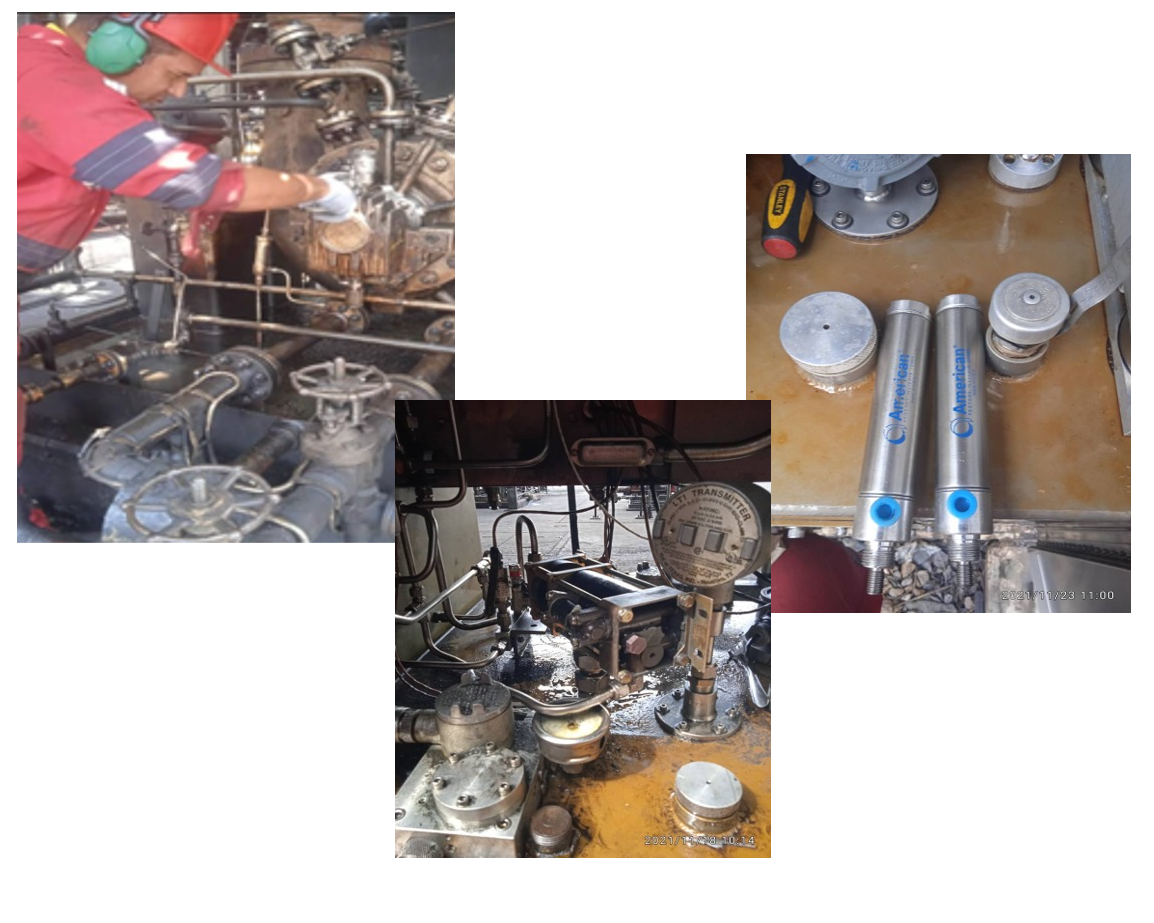
We designed and implemented the migration to a centralized oil mist lubrication system. We installed around ten lubrication panels that today serve between 20 and 30 process pumps in the two upgraders. In this system, the oil is atomized and travels through a network of pipes to each lubrication point, where it reaches the bearing as a film of clean oil, continuously and in the correct quantity.
This change is especially valuable in the conditions of the Belt. Lubrication stops depending on manual replenishment and becomes constant. The mist maintains positive pressure inside the bearing housing, which prevents the entry of moisture, H₂S, and dust. The bearings operate at a lower temperature and with less wear, which reduces the vibrations that end up affecting the mechanical seals. In addition, the standby equipment that remains stopped is also lubricated and protected, ready to start when needed.
Execution:
We executed the project with our own specialized personnel and 100% Venezuelan labor, a team that has firsthand knowledge of the operation of the Orinoco Belt upgraders. We started with international mist lubrication designs and standards and adapted them to the actual conditions of both plants: the condition of their equipment, the local climate, and the characteristics of the crude oil they process.
All work was carried out under international safety standards and safe work procedures, with operational reliability as a priority at every stage. A compact team of two specialized technicians, working eight-hour shifts, completed the installation of the ten panels within 60 to 70 days. In total, approximately 1,000 man-hours were completed without any workplace accidents or reported incidents, and without affecting the operational continuity of the plants.
The results:
With the new system, the upgraded pumps have reliable lubrication protected from the conditions in the area, which translates into a longer service life for bearings and seals, fewer unscheduled shutdowns, and less non-productive time in processing. By eliminating manual oil replenishment in each piece of equipment, maintenance workload and personnel exposure in areas with the presence of H₂S were also reduced. For the customer, this means protecting the continuity of two high-capacity facilities and increasing the availability of their most critical assets.
Do your rotating equipment operate under demanding conditions? Let's talk about how to improve their reliability.