
“Generating Value for the Country”
The Context: The Pumps That Move Crude Oil
An upgrader transforms the extra-heavy crude oil from the Orinoco Oil Belt into a lighter, more marketable crude oil. During this process, centrifugal pumps move the crude oil, diluent, and products from one unit to another. They operate at high temperatures and handle viscous, corrosive fluids.
This project included the two most common types of pumps in the industry:
- Overhung pumps: the impeller is mounted at the end of the shaft. They are compact and are used for smaller-scale applications.
- Between-bearing pumps: the shaft is supported at both ends. They are used for applications with higher flow rates, pressures, or temperatures.
In both types, the mechanical seal is the component that prevents the process fluid from leaking along the shaft. It is also one of the most common causes of failure in centrifugal pumps.
What Is at Stake
When a process pump is taken out of service, the unit is left without backup. If the operating pump also fails, the unit must reduce its load or shut down.
A poorly performed repair is just as dangerous. An unbalanced rotor generates vibrations that destroy bearings and seals in a short time. A defective seal can leak hot hydrocarbons or hydrogen sulfide (H₂S), creating a risk of fire and personnel exposure. That is why a comprehensive repair is not limited to replacing parts: it must restore the equipment to its original design conditions.
The Challenge
The customer needed four critical pumps returned to service, two with overhung impellers and two between bearings, within 60 days. The requirements were demanding:
- Technical standards: each pump had to be repaired according to the tolerances of the API 610 standard, which governs centrifugal pumps in the oil industry. Each seal had to comply with the API 682 standard, which governs mechanical seals.
- Materials: several parts had to be refurbished or remanufactured from very different materials: carbon steel, AISI 304, 316, and 410 stainless steels, chrome alloys, Monel K500, and bronze.
- Safety, quality, and environment: dedicated, customer-approved safety and environmental personnel, a quality plan aligned with the ISO 9001 standard, gas and H₂S detectors for each crew, waste management in compliance with Venezuelan regulations, and a final report for each piece of equipment.
The solution
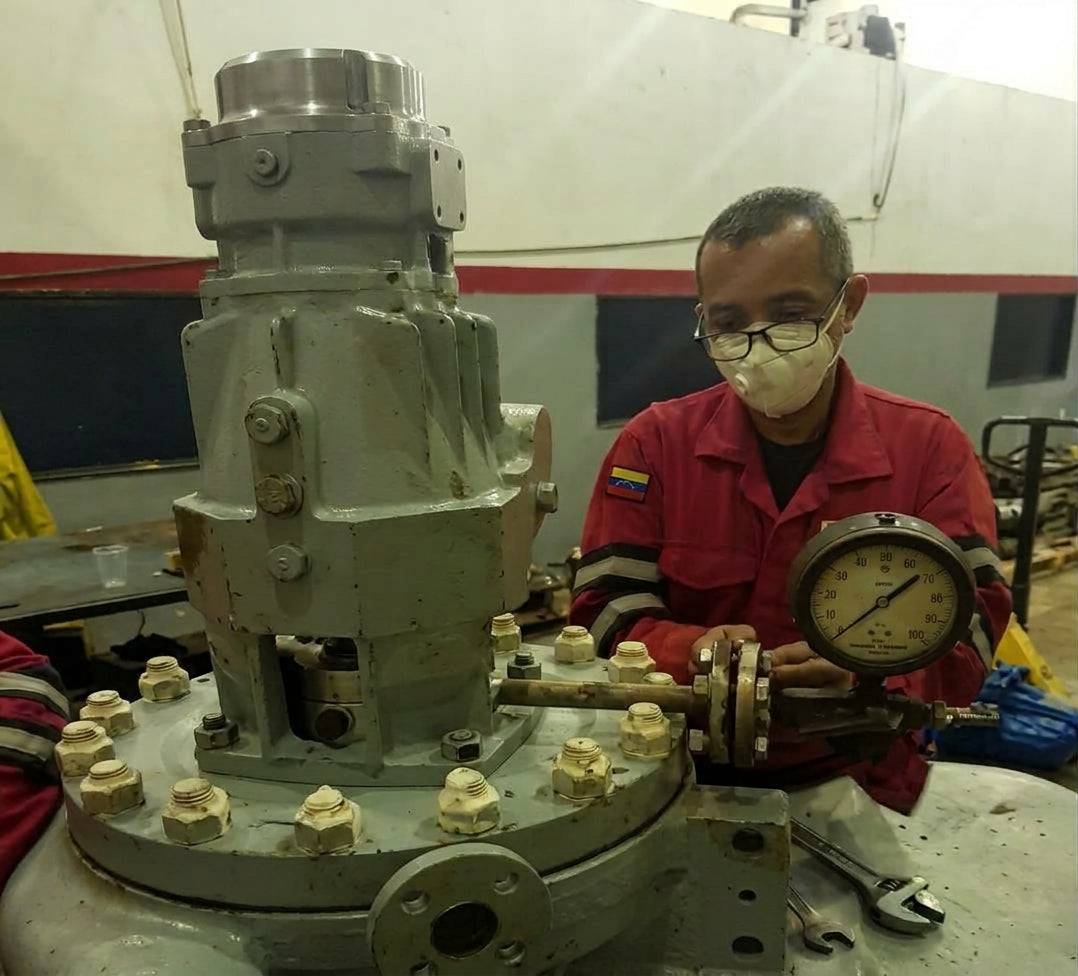
We removed the pumps from the central plant’s auxiliary building and brought them to our workshop. There, each one underwent a complete overhaul:
- Disassembly, cleaning, and visual and dimensional inspection, with concentricity and perpendicularity checks.
- Reconditioning by welding, machining, or shaft, bearing housing, volute, cover, impeller, ring, flange, coupling, and seal sleeve resurfacing.
- Fabrication of parts that could not be salvaged.
- Dynamic balancing of the rotor, assembly, testing, and final painting.
At the same time, the four mechanical seals received comprehensive servicing: ultrasonic cleaning, inspection, lapping and polishing of the faces, bellows inspection, component fabrication, and static and dynamic testing in accordance with API 682. Dynamic balancing is one of the most important steps. A balanced rotor rotates without vibration, which extends the life of the bearings and seals. This, combined with API 610 tolerances, is what makes a repaired pump perform like new.
Execution
In addition to the workshop work, our team provided 1,120 man-hours of on-site technical assistance as direct support to the refiner's personnel:
- 880 hours from a rotating equipment specialist technician.
- 240 hours from a specialist engineer with over 15 years of experience.
Everything was carried out with a specific occupational safety and health plan, dedicated safety and environmental personnel, certified protective equipment, and on-site H₂S detectors. The 1,120 man-hours were completed without lost-time accidents. Furthermore, we backed the repair with a six-month warranty.
The results
16 pumps were delivered in 48 days, 20% ahead of the contractual deadline. All meet API 610 and API 682 standards, with complete quality documentation. For the refiner, this meant:
- Restored availability: they regained their critical equipment and reduced the risk of leaks and unscheduled downtime.
- 35% savings, equivalent to USD 64,615, by repairing the pumps instead of replacing them with new equipment.
This case demonstrates that, with local talent and technical expertise, it is possible to keep industrial assets in optimal condition and generate value for the country.
Does your plant need to return its critical equipment to service without compromising reliability? Let's talk.